

In the age of AI, learning how to learn is the ultimate skill: Dr Ayesha Khanna
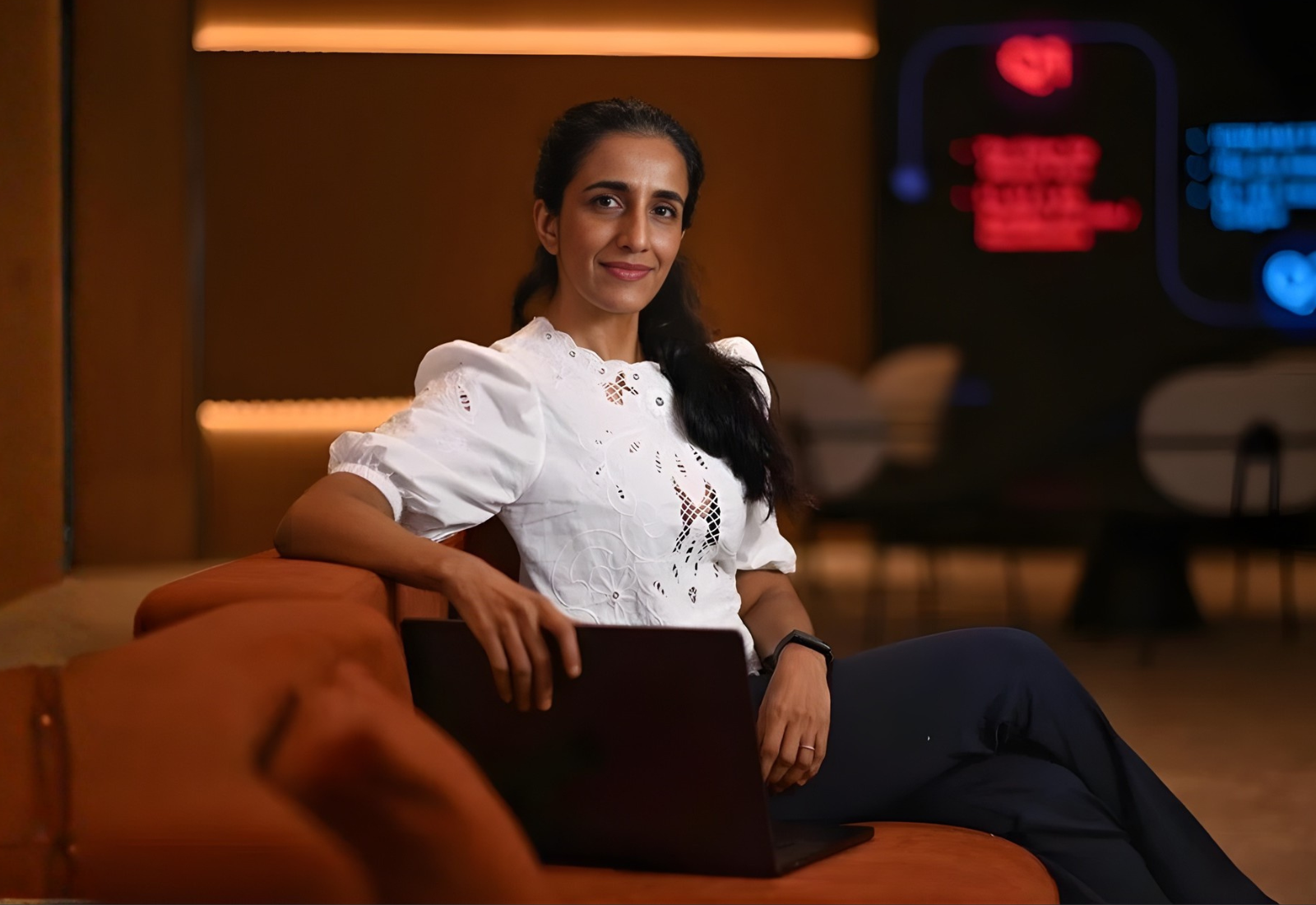
AI expert Ayesha Khanna served as a member of the Ministry of Education’s steering committee in 2014 which developed SkillsFuture.
ST PHOTO: CHONG JUN LIANG
SINGAPORE – In a world and economy increasingly shaped by artificial intelligence, meta-skills – or higher-order abilities that help individuals learn, adapt and navigate complex environments – are the key to maximising one’s potential in the workplace.
Examples of meta-skills include creativity, resilience and complex problem-solving skills.
While AI tools can help to retrieve information, how one uses that information and applies creativity and critical thinking will be key.
“The skill is really going to be in combining our domain expertise – such as our work experience, what we learnt in school or things we are passionate about – and the ability to use AI to build creative solutions,” said Dr Ayesha Khanna, co-founder of artificial intelligence solutions firm and incubator ADDO Ai.
The idea of meta-skills first gained mainstream attention when US author and design thinker Marty Neumeier published a book – Metaskills: Five Talents For The Robotic Age – in 2012 about such higher-order abilities.
The term gained prominence again around September 2025 when Google DeepMind chief executive Demis Hassabis argued then that the most crucial ability for the next generation will be learning how to learn
Dr Khanna, who served as a member of the Ministry of Education’s steering committee in 2014 which developed SkillsFuture, said that Singapore had the foresight to invest in skills upgrading and lifelong learning.
“In an era in which we’re entering with AI, it’s increasingly not just about academic qualifications that end at a certain point in your career, but skills that you need to constantly upgrade as you adapt to changing market conditions. That can be quite exciting,” said Dr Khanna.
Q: AI commentators have said the most critical meta-skill for the future, amid rapid AI advancements, is “learning how to learn”. What does that look like for students?
A: My generation was very much about memorisation and exam drills, and there were problems with that.
One problem was that the learning model was of content ingestion and then regurgitating content. That was a big problem because we are unable to transfer what we have learnt into a way of thinking.
So if I learnt physics and I already know the answers, then I have not learnt how a physicist thinks.
A physicist thinks by having an ambiguous problem and trying to solve it, tinkering and experimenting, and failing and getting up again.
So learning how to learn is learning how to problem-solve. It requires you to have a mindset that is used to dealing with ambiguity, that is used to taking things from different disciplines and putting them together, and is not limited to your exam or the last 10-year series (of exam papers) that you may have.
Learning how to learn includes AI fluency as well. AI can help you come up with new ideas. If you have the right skills, you can use AI to voice out what you are thinking, to have somebody challenge you and make you defend your thinking.
It actually forces you to do critical thinking and that’s amazing. That means that you have a personalised Socrates in your pocket all the time, nagging, probing and pushing you to do better.
Q: How should Singapore’s universities redesign their curricula to cultivate such abilities?
A: In the long run, I think it’s important that we move from an exam-centric format to a tutorial-centric approach.
When students are in the classroom, we are not teaching in the traditional sense. We’re actually having conversations and debates with each other. Students should be debating ideas, problem-solving, and investigative tinkering, all of which are very creative.
Say you want to be a financial adviser. At home, you learn the concepts with an AI tutor. In class, a classmate plays a nervous retiree worried about outliving their savings. Can you explain the plan clearly? Can you handle their fear? Suddenly, you’re drawing on finance, psychology and communication all at once.
In this AI age, you cannot judge if a person has understood something if you just make them submit things online. So exam formats should be more tutorial style.
Q: What are the most important AI-related skills Singaporeans need to stay competitive in the workforce – and are current training programmes keeping up?
There are some skills like openness to adapt and openness to be a lifelong learner, which are also meta-skills.
There are also other concrete skills. For example, if a new AI tool comes along, it’s the ability to see how you can design a process to make it better.
We should also not have the mindset that we are just making people more efficient; we should also have a mindset that we are amplifying their capabilities.
Efficiency is the floor, not the ceiling. The real question isn’t how AI can help people do the same things faster. It’s how it can help them do things they couldn’t before.
Everybody should be able to learn about AI tools and, when they have more time, think about what are some of the higher-order things they can do with more time in a hospital, in a law firm or in an accounting firm.
Learning how to expand your capacity instead of just increase productivity – that’s the next phase that we have to go on because that’s the only way that Singapore’s youth and mid-career workers will feel comfortable about AI.
Q: Many workers feel overwhelmed by rapid technological change. How do companies also reduce this anxiety and support smoother transitions?
A: Communicate, communicate, communicate. They say that communication matters in relationships, right? Why do businesses not communicate clearly about AI initiatives?
First, colleagues and employees should know that their domain expertise matters in an age of AI. AI does not understand an organisation’s values, goals, or customers by itself.
Second, they should be involved in how AI is used to improve processes and trained in how to use AI as an assistant and then how to manage AI agents that do some work autonomously.
Finally, humans must be given the room to use the extra time they now have with AI agents to develop higher-value skills and contributions.
About Dr Ayesha Khanna
Dr Khanna, who was born in Pakistan, spent more than 10 years on Wall Street designing large-scale systems for trading, risk management and data analytics.
Her work later expanded into examining the broader impact of emerging technologies. She co-founded the Hybrid Reality Institute, which advises on the social and economic consequences of rapid technological change.
Dr Khanna moved to Singapore in 2012 with her husband, Mr Parag, a geopolitical strategist and academic. In 2017, she co-founded ADDO Ai and became its chief executive. Forbes listed the company among the four leading artificial intelligence firms. The couple have two children, aged 16 and 14, who are studying in an international school now.
Read the full article here
